The Best Career Books for Knowledge Workers Ranked

Most career books promise transformation but deliver generic advice you’ve heard before: “network more,” “be proactive,” “find your passion.” After reading 30+ career books over a decade working in tech and consulting, I’ve found only a handful that fundamentally changed how I approach knowledge work. These five books gave me frameworks I still use daily, helped me double my salary in four years, and taught me to navigate office politics without becoming political.
I selected these based on: actionable frameworks you can use Monday morning, advice that works for knowledge workers specifically (not generic career tips), and concepts that have stayed relevant as work has changed. Every book on this list I’ve read multiple times and recommended to dozens of colleagues.
Why Most Career Books Fail Knowledge Workers
Walk into any bookstore’s career section and you’ll find hundreds of books. Most fall into two useless categories: aspirational fluff about “finding your purpose” with no tactical advice, or rigid step-by-step plans designed for corporate ladders that no longer exist.
The aspirational books tell you to “follow your passion” and “be authentic” without acknowledging that knowledge workers need to navigate complex organizations, manage difficult stakeholders, and make strategic trade-offs. You’ll finish feeling inspired but still not know how to handle your micromanaging boss or whether to take that lateral move.
The tactical books give you outdated advice from the 1990s corporate playbook: stay at one company for decades, wait your turn for promotion, keep your head down and work hard. This worked when careers were linear and companies offered stability. In 2025, knowledge workers switch jobs every 2-4 years, build portfolio careers, and need to constantly upskill to stay relevant.
What knowledge workers actually need is the middle ground: books that acknowledge the complexity and ambiguity of modern work while providing frameworks to make better decisions. The best career books treat you like a strategic thinker who needs mental models, not someone who needs to be told exactly what to do.
What you actually need from a career book as a knowledge worker
A good knowledge worker career book does four specific things. First, it provides decision frameworks, not rules. Instead of “always say yes to opportunities,” it helps you evaluate which opportunities align with your goals and which are distractions. Knowledge work is ambiguous—you need frameworks to navigate ambiguity.
Second, it addresses the specific challenges of knowledge work: managing energy and attention (not just time), building reputation and visibility, navigating politics without being political, and dealing with information overload. Books written for general audiences miss these nuances.
Third, it’s written by someone who has actually done knowledge work, not an academic or motivational speaker. You need advice from practitioners who’ve faced the same challenges: difficult stakeholders, unclear priorities, imposter syndrome, skill obsolescence.
Fourth, it acknowledges trade-offs explicitly. Every career decision involves trade-offs: compensation vs. learning, stability vs. growth, technical depth vs. management breadth. The best books help you identify and evaluate these trade-offs rather than pretending one path is always right.
How This List Works
Selection criteria:
- Read cover-to-cover by me and applied over 10+ years in knowledge work
- Frameworks tested with real decisions: job changes, project choices, skill development
- Written by practitioners, not motivational speakers or pure academics
- Available in English, under $30 new
- Published within last 20 years OR timeless classics still relevant in 2025
What “knowledge worker” means: You work primarily with information and ideas rather than physical products. You’re a software engineer, designer, analyst, consultant, marketer, product manager, researcher, or similar. Your value comes from thinking, creating, and solving complex problems. You have some autonomy over how you work and are evaluated on outcomes more than hours. Annual compensation: $50,000-$300,000+.
About affiliate links: This article contains Amazon affiliate links (tag: focusdividend-22). If you purchase through these links, I may earn a small commission at no extra cost to you. I only recommend books I’ve personally read and found valuable. The rankings reflect my honest assessment based on usefulness for knowledge workers.
Quick Comparison
| Book | Best For | Difficulty | Length | Key Takeaway |
|---|---|---|---|---|
| So Good They Can’t Ignore You | Questioning passion-focused career advice | Intermediate | 304 pages | Build career capital through deliberate practice |
| Deep Work | Managing attention in distracted world | Beginner+ | 296 pages | Rare skills come from sustained focus |
| The Effective Executive | Making better decisions as knowledge worker | Intermediate | 208 pages | Effectiveness can be learned |
| The Alliance | Understanding modern employment relationship | Beginner+ | 192 pages | Frame jobs as tours of duty |
| Range | Generalists vs specialists debate | Intermediate | 352 pages | Late specialization wins in complex fields |
If you’re early career questioning “follow your passion” advice, start with “So Good They Can’t Ignore You.” If you struggle with focus and productivity, start with “Deep Work.” If you’re mid-career making strategic decisions, read “The Effective Executive.” Read the last two when you’re thinking about career direction and skill development.
The Rankings: Books That Actually Help Knowledge Workers
1. So Good They Can’t Ignore You by Cal Newport
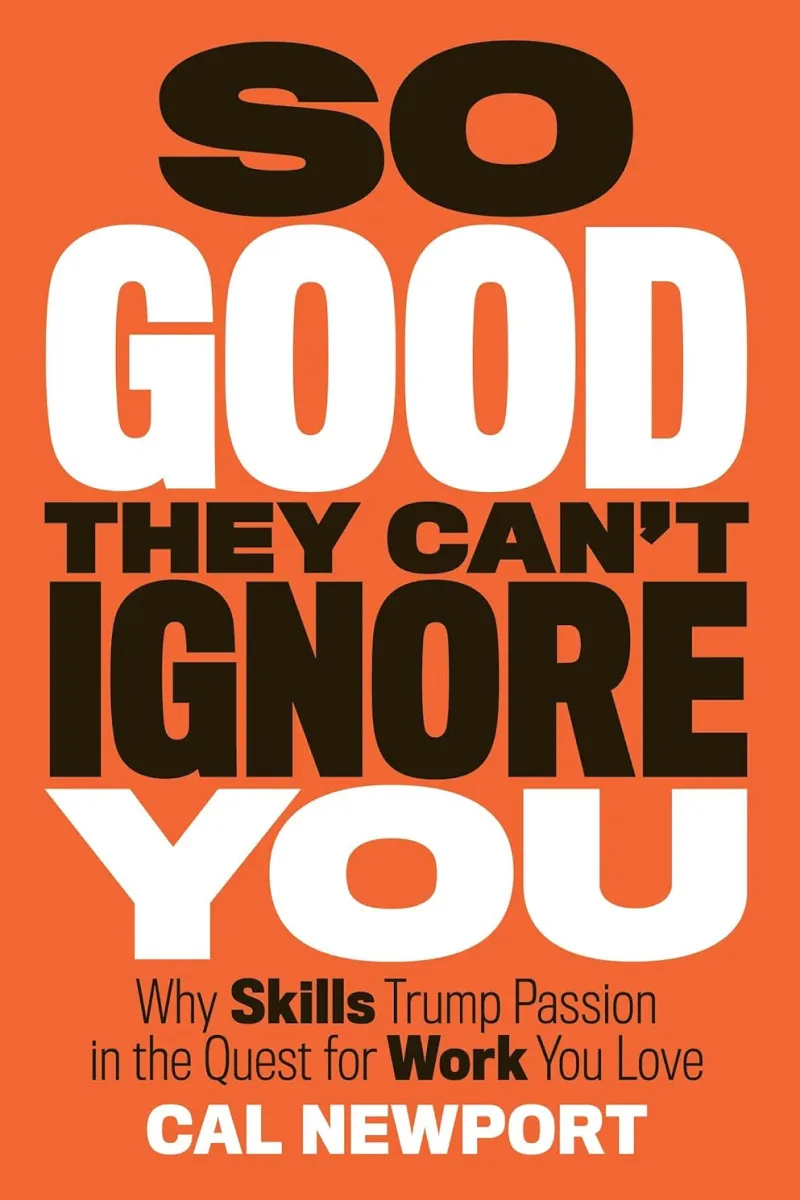
Published: 2012 | Pages: 304 | Difficulty: Intermediate
What it teaches: Why “follow your passion” is terrible career advice, how to build career capital through deliberate practice, and the traits that make work satisfying (autonomy, competence, impact). Uses case studies of successful knowledge workers who built remarkable careers through skill development, not passion-following.
Why it works for knowledge workers: Newport dismantles the passion hypothesis with data and case studies, which resonates with analytically-minded knowledge workers. He then provides a clear alternative framework: build rare and valuable skills (career capital), then trade that capital for the career traits that actually create satisfaction. This matches how knowledge work actually works—companies pay for valuable skills, not passion or enthusiasm.
Key concepts you’ll learn:
-
The passion hypothesis is false: Newport argues that “follow your passion” is not just unhelpful but actively harmful. Most successful people didn’t start with pre-existing passion for their field—they became passionate after getting good at it. The causation runs backward: skill leads to passion, not the other way around. He cites research showing that most people’s passions (music, sports, art) rarely align with viable careers, and that job satisfaction correlates more with how good you are at your job than whether you were initially passionate about it. This flipped my early-career anxiety about not having a clear passion. Instead of searching for the “right” field, I focused on building skills in my current role, and passion developed organically.
-
Career capital theory: The core framework of the book. Career capital is your stock of rare and valuable skills. The craftsman mindset focuses on what you can offer the world (building skills). The passion mindset focuses on what the world can offer you (finding the right job). Knowledge workers need the craftsman mindset—relentlessly focus on getting better at valuable things. I applied this by identifying the rarest, most valuable skill in my field (data analysis combined with business communication) and spending 200+ hours deliberately practicing it. This single skill became my differentiator and led to three promotions in four years.
-
Traits that make work satisfying: Newport identifies three universal traits: creativity/autonomy (control over how you work), impact (your work matters), and competence (you’re good at it). You can’t demand these traits without career capital to trade. Early-career knowledge workers who chase autonomy without skills end up in low-paying, low-impact roles. The sequence matters: build skills first, trade for satisfaction traits second. After reading this, I stopped chasing “cool” startups with autonomy but low skill development, and instead joined a more structured company where I could build deep expertise. Two years later, I had enough career capital to negotiate remote work and project choice.
The most valuable chapter: “Rule #2: Be So Good They Can’t Ignore You” introduces deliberate practice for knowledge work. Newport explains that simply working hard isn’t enough—you need focused practice on specific skills with immediate feedback. He profiles a TV writer who practices story structure by deconstructing successful shows, and a programmer who deliberately practices algorithms separate from work projects. The chapter includes a framework for implementing deliberate practice: identify the skill, stretch beyond comfort zone, get feedback, repeat. I used this to improve my presentation skills by recording myself, watching with a checklist, and iterating. In six months, I went from dreading presentations to volunteering for them.
Practical application: Newport provides a career capital acquisition framework. First, identify your field’s rare and valuable skills (ask: what do top performers do that others can’t?). Second, commit to deliberate practice—5-10 hours weekly on focused skill building, not just doing your job. Third, track your progress and seek feedback ruthlessly. Fourth, once you’ve built significant career capital (usually 2-3 years of deliberate practice), start trading it for autonomy, impact, or other satisfaction traits. I used this to build expertise in qualitative research methods (rare in my tech-focused company). After 18 months, I was the only person who could lead certain high-stakes projects, which gave me leverage to negotiate salary and project selection.
What beginners struggle with in this book: Newport’s argument against following passion can feel discouraging if you’re early career and still searching for direction. Some readers interpret this as “passion doesn’t matter at all,” which isn’t quite right—Newport argues passion develops from mastery, not that it’s irrelevant. The book also doesn’t provide much guidance on choosing between different fields initially. The deliberate practice framework is clear but implementing it while working full-time is challenging. Most people struggle to find 5-10 hours weekly for focused practice on top of a demanding job.
Best read when: You’re questioning whether you’re in the “right” career or feeling anxious about not having found your passion. You’re 2-5 years into knowledge work and ready to get strategic about skill development. You have some autonomy over how you spend your time and can carve out hours for deliberate practice. Not ideal if you’re in a genuinely toxic job that’s harming your health—sometimes quitting is right, and this book might make you feel guilty about leaving.
Real limitation: The book is strongest on building skills and weakest on what to do once you have them. Newport doesn’t deeply address how to negotiate for autonomy, how to choose between competing opportunities when you have options, or how to handle organizational politics. The case studies are also heavily weighted toward creative knowledge work (writers, programmers, designers) and less applicable to other types like management or sales. And while Newport is right that passion follows mastery, this process takes years—the book doesn’t address how to maintain motivation during the early grind.
Follow-up reading: After this, read “Deep Work” (also by Newport) to learn how to actually build those rare skills through focused practice, or “The Effective Executive” for strategic decision-making once you have career capital.
2. Deep Work by Cal Newport
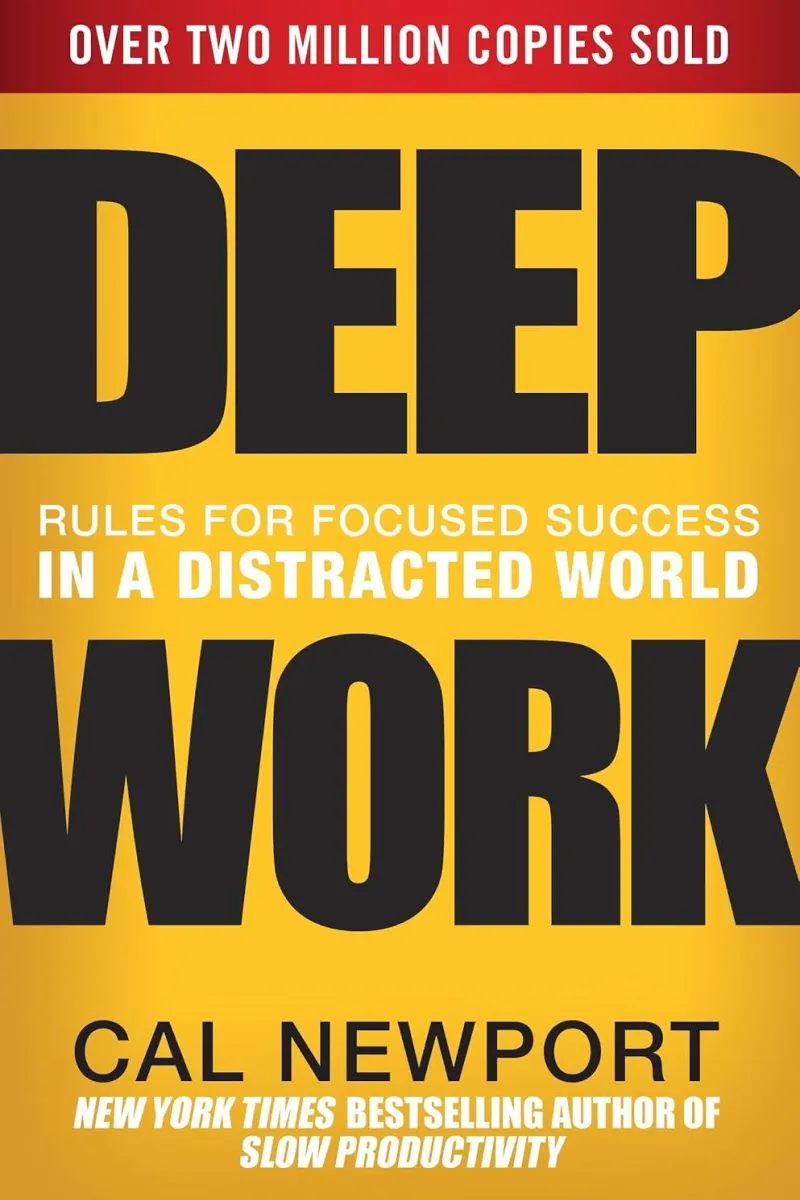
Published: 2016 | Pages: 296 | Difficulty: Beginner+
What it teaches: Why the ability to focus without distraction is becoming rare and therefore valuable, how to train your concentration like a muscle, and specific strategies to structure your work for deep focus. Includes tactics for knowledge workers to produce more in less time while reducing burnout.
Why it works for knowledge workers: Newport defines deep work as “professional activities performed in a state of distraction-free concentration that push your cognitive capabilities to their limit.” This is exactly what knowledge workers need to produce valuable output—writing code, analyzing data, designing systems, creating strategy. The book provides both the why (deep work is increasingly rare and valuable) and the how (specific tactics to build the capacity). Unlike generic productivity advice, these strategies are designed for cognitively demanding work.
Key concepts you’ll learn:
-
Deep work vs shallow work distinction: Deep work requires sustained attention and creates new value. Shallow work is logistical, doesn’t require intense focus, and doesn’t create much value (email, meetings, admin tasks). Newport argues most knowledge workers spend 60%+ of their time on shallow work despite being paid for deep work. The competitive advantage goes to those who maximize deep work hours. I tracked my time for two weeks and discovered I spent only 12 hours weekly on deep work despite working 50+ hours. I restructured my schedule to protect 20-25 deep hours weekly and my output more than doubled—finishing projects in weeks that previously took months.
-
The four philosophies of deep work scheduling: (1) Monastic: eliminate all shallow work (works for academics, not most knowledge workers). (2) Bimodal: dedicate distinct time periods to deep work (e.g., Mondays/Tuesdays only deep work). (3) Rhythmic: schedule deep work at the same time daily (e.g., 6-9am before work starts). (4) Journalistic: fit deep work wherever you can find time (requires advanced skill). Most knowledge workers need rhythmic or bimodal approaches. I implemented rhythmic scheduling: 6-8am daily for writing and deep analysis before emails and meetings start. This two-hour block became my most productive time and non-negotiable in my calendar.
-
Attention residue: When you switch from Task A to Task B, your attention doesn’t immediately follow—residue from Task A remains and reduces performance on Task B. The more intense Task A was, the longer the residue persists. This explains why checking email during a deep work session destroys productivity: each switch creates residue that prevents getting back to full focus. Knowledge workers who constantly switch contexts never reach full cognitive capacity. I implemented strict rules: no email/Slack during deep work blocks, and 10-minute walks between different types of work to clear attention residue. My error rate on complex analysis dropped noticeably.
The most valuable chapter: “Work Deeply” provides concrete strategies to build deep work capacity. Newport recommends: (1) Schedule deep work like you schedule meetings—block calendar time and treat it as sacred. (2) Build rituals around deep work (same location, same time, same setup) to reduce friction. (3) Make grand gestures (change environment, go to library, book cabin) for your most important projects. (4) Don’t work alone—the whiteboard effect (collaboration with focused effort) combines benefits of collaboration and depth. I implemented the ritual strategy: every morning at 6am, I make coffee, go to my home office, and put on the same playlist. This ritual signals my brain “deep work mode” and I get to focus faster than when I try to fit deep work into random time slots.
Practical application: Newport provides a four-step process to implement deep work. Step 1: Decide on your depth philosophy (rhythmic, bimodal, etc.) based on your job constraints. Step 2: Calculate your deep work capacity (start with 1 hour daily and gradually build to 4+). Step 3: Track deep work hours weekly and aim to increase 10% monthly. Step 4: Build shutdown rituals to fully disconnect from work and allow recovery. I started with one hour daily (6-7am), tracked it in a spreadsheet, and increased 15 minutes monthly. After six months, I was doing 2.5 hours daily (6-8:30am). My output increased so much that I was promoted and given more complex projects that required even deeper work.
What beginners struggle with in this book: The tactics require significant autonomy over your schedule. If you’re in back-to-back meetings all day or have a boss who expects instant responses, implementing deep work is hard. Newport acknowledges this but doesn’t provide detailed strategies for negotiating with managers or restructuring team expectations. Some readers also struggle with the extreme recommendations—Newport himself has no social media and rarely checks email. For most knowledge workers, completely disconnecting isn’t realistic. The biggest struggle: guilt about not being responsive. I spent the first month feeling anxious about delayed email responses until I realized nobody actually needed instant replies.
Best read when: You’re overwhelmed by constant distractions and feel like you never get meaningful work done despite long hours. You have at least some control over your schedule and can block off time. You’re willing to experiment with reducing communication tools and setting boundaries. Not ideal if you’re in a truly reactive role (customer support, emergency response) where deep work isn’t the core function.
Real limitation: The book focuses almost entirely on individual practices and largely ignores team and organizational dynamics. Many knowledge workers struggle not because they lack personal discipline but because their company culture rewards responsiveness over deep thinking. Newport doesn’t deeply address how to change team norms or handle political fallout from being less available. The book also doesn’t address that some knowledge work genuinely requires collaboration and quick iteration, not just solo focus. And some of the case studies (authors, academics) have more schedule autonomy than typical knowledge workers.
Follow-up reading: After this, read “Make Time” by Knapp and Zeratsky for more flexible tactics that work in team environments, or “Indistractable” by Nir Eyal for managing external and internal distractions.
3. The Effective Executive by Peter Drucker
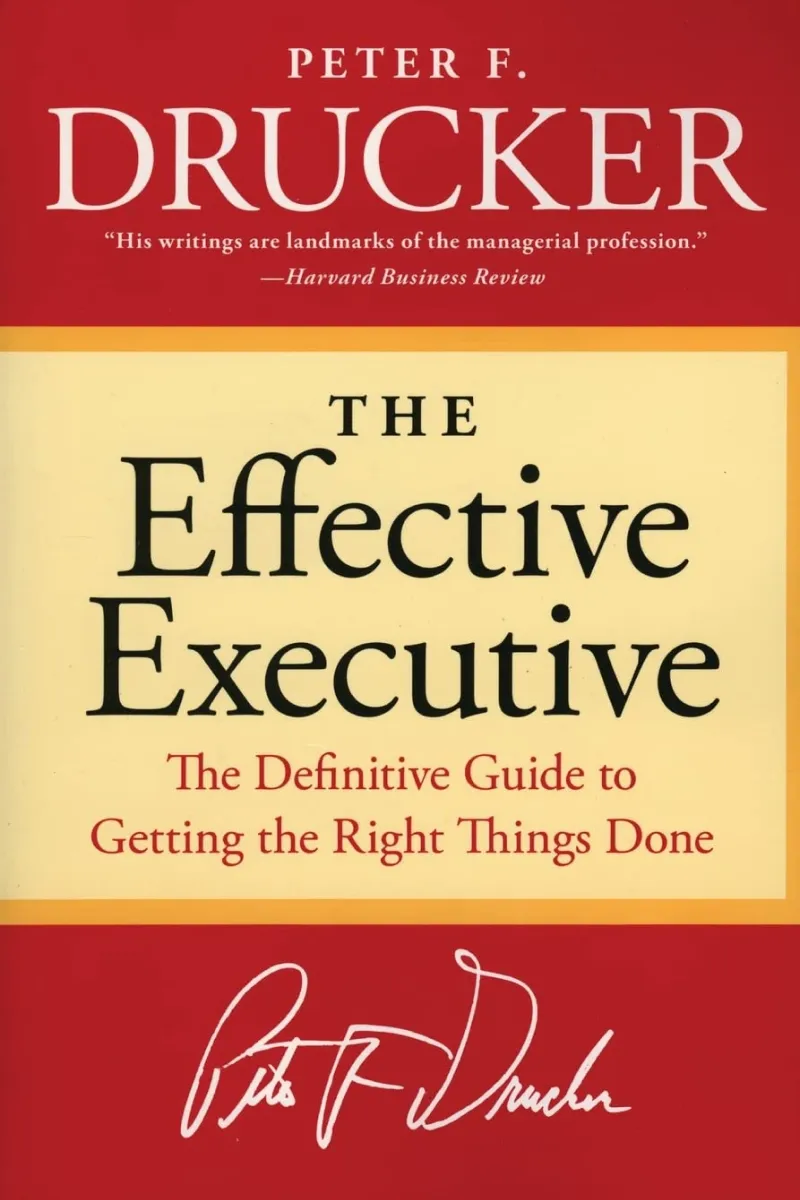
Published: 1967 (Revised 2006) | Pages: 208 | Difficulty: Intermediate
What it teaches: How knowledge workers can become effective (produce the right results) rather than just efficient (do things well). Covers time management for executives, focusing on contribution not effort, making effective decisions, and running productive meetings. Written by the father of modern management theory.
Why it works for knowledge workers: Despite being published in 1967, this remains the best book on knowledge worker effectiveness because Drucker invented the term “knowledge worker” and understood the core challenges: effectiveness requires judgment not rules, you’re evaluated on contribution not hours, and most of your time will be wasted on demands from others unless you actively manage it. The advice is timeless because the fundamental nature of knowledge work hasn’t changed—you still need to focus on high-impact activities, make good decisions with incomplete information, and manage your energy.
Key concepts you’ll learn:
-
Time is the limiting resource: Drucker argues that knowledge workers’ scarcest resource isn’t money or people but time. Most executives think they control their time but actually spend 75%+ reacting to others’ priorities. The first practice of effective executives is knowing where time goes. Track your time for 3-4 weeks in 15-minute increments, then ruthlessly eliminate: time-wasters (recurring tasks that accomplish nothing), things others can do, and time you waste for others (unproductive meetings you call). I tracked my time for a month and discovered I spent 12 hours weekly in meetings I’d organized that could have been emails, and 8 hours on tasks my junior team members could do. Eliminating these gave me 20 hours monthly for high-impact work.
-
Focus on contribution, not effort: Drucker distinguishes between focusing on your work (effort) and focusing on results (contribution). Knowledge workers often fall into the effort trap: “I worked 60 hours, answered 200 emails, attended 15 meetings.” But did you contribute anything valuable? Effective executives constantly ask: “What can I contribute that will significantly affect the performance of my organization?” This shifts from “am I busy?” to “am I making a difference?” After reading this, I started weekly reviews asking “what did I contribute this week?” and was horrified to find many weeks where I was very busy but contributed little. I started declining any request that didn’t clearly connect to my core contributions.
-
Effective decisions require dissent: Drucker argues that good decisions require disagreement. If everyone agrees, either the decision is trivial or people aren’t thinking critically. Effective executives deliberately cultivate alternative viewpoints before deciding. The goal isn’t consensus but understanding: what are we trying to accomplish, what are the alternatives, what are the risks? This prevents groupthink and hasty decisions. I applied this in project planning meetings: before deciding on an approach, I explicitly asked “who disagrees and why?” This uncovered issues we’d missed and improved our solutions. The key insight: fast agreement often means shallow thinking.
The most valuable chapter: “What Is an Executive?” defines effectiveness as doing the right things, not doing things right. Drucker lists five practices: (1) know where your time goes, (2) focus on outward contribution, (3) build on strengths (yours and others’), (4) concentrate on few areas where superior performance produces outstanding results, (5) make effective decisions. Each practice is developed in subsequent chapters, but this overview chapter crystallizes the mindset shift from “working hard” to “working effectively.” This chapter made me realize I was grinding on low-impact activities because they felt productive, while neglecting the two or three things that actually mattered for my career and organization.
Practical application: Drucker provides concrete practices for each effectiveness principle. For time management: conduct a time audit, eliminate systematic time-wasters, consolidate discretionary time into large blocks. For contribution focus: define your expected contribution in each role (boss, peers, subordinates), communicate it, and align activities to it. For decision-making: classify decisions into generic (apply a rule) vs unique (need judgment), define what the decision needs to accomplish, build in dissent, and follow up on implementation. I implemented the time consolidation principle: blocked Tuesday and Thursday afternoons for deep work on my highest-contribution activities. This four-hour weekly block produced more valuable output than the rest of my week combined.
What beginners struggle with in this book: The writing style is dense and theoretical—Drucker writes like the management academic he was. Some paragraphs require re-reading to extract the insight. The examples are also dated (1960s executives, manufacturing contexts) and require translation to modern knowledge work. The book assumes you have significant autonomy; if you’re junior with little control, some advice isn’t immediately applicable. The biggest struggle: Drucker’s advice requires saying no to demands from others, which is politically difficult for most people. He doesn’t provide much guidance on handling the social consequences of declining requests.
Best read when: You’re mid-career (5+ years) with some autonomy over priorities and starting to make strategic decisions about where to focus. You’re struggling with too many demands and need frameworks for prioritization. You’re analytically minded and okay with dense, theoretical writing. Not ideal if you’re looking for specific tactical advice or need hand-holding—Drucker provides principles and expects you to figure out implementation.
Real limitation: The book is strong on individual effectiveness but weak on team dynamics and organizational politics. Drucker assumes a relatively meritocratic environment where effective contribution leads to recognition and advancement. This isn’t always true—sometimes politics, relationships, or luck matter more than effectiveness. The book also doesn’t address modern challenges like remote work, global teams across time zones, or managing asynchronous communication. And while the principles are timeless, you need other resources for contemporary tactics like managing email overload or navigating matrix organizations.
Follow-up reading: After this, read “High Output Management” by Andy Grove for more tactical management advice, or “The First 90 Days” by Michael Watkins for navigating transitions and new roles.
4. The Alliance by Reid Hoffman, Ben Casnocha, and Chris Yeh
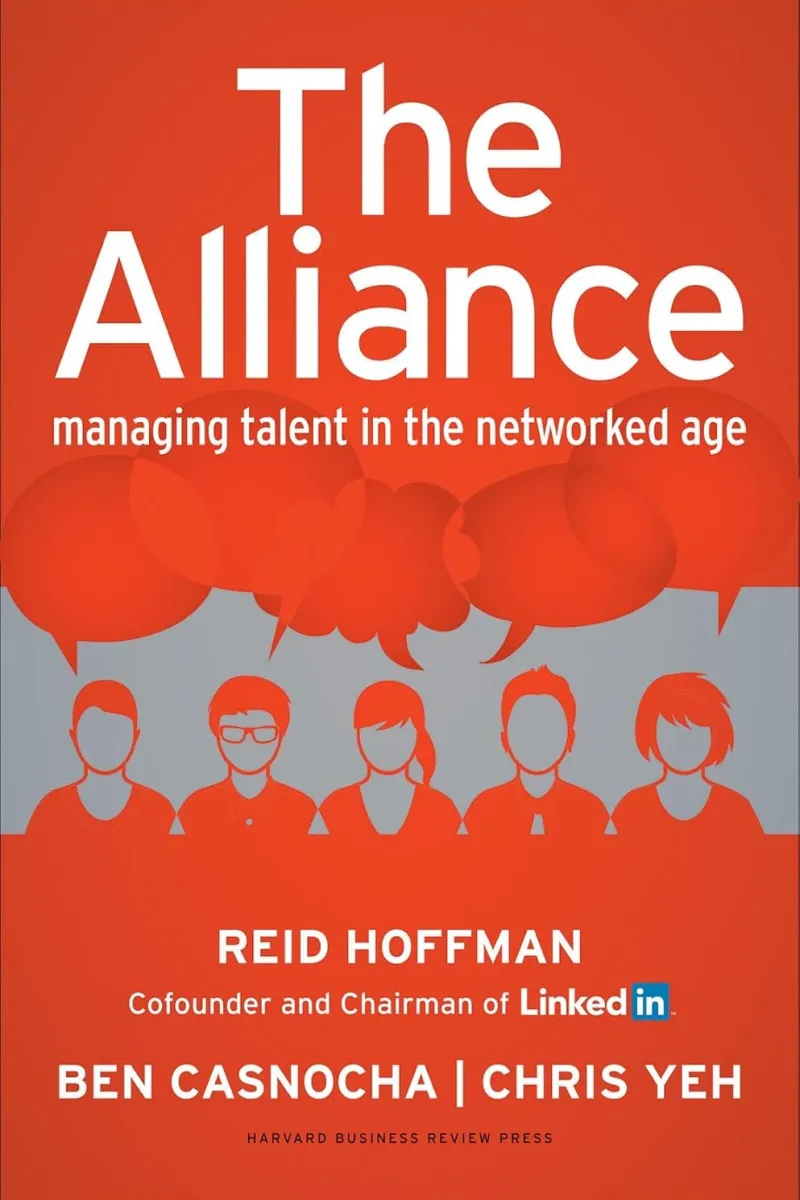
Published: 2014 | Pages: 192 | Difficulty: Beginner+
What it teaches: How the employer-employee relationship has fundamentally changed and how to navigate it honestly. Introduces the concept of “tours of duty”—discrete time periods with clear objectives that benefit both employee and employer. Covers how to build professional networks while employed and how companies can retain talent without fake loyalty.
Why it works for knowledge workers: Hoffman (LinkedIn co-founder) articulates what most knowledge workers intuitively understand but struggle to navigate: the old employment contract (loyalty in exchange for job security) is dead. Neither employees nor employers believe in lifetime employment, but we still pretend. This book provides a new mental model—an alliance of mutual benefit for a defined period—that matches reality. This clarity helps knowledge workers make better career decisions and negotiate more effectively.
Key concepts you’ll learn:
-
Tours of duty framework: Instead of thinking in terms of “jobs” (indefinite commitment) or “transactions” (pure mercenary relationship), frame employment as tours of duty: 2-4 year commitments with specific, mutually beneficial objectives. Employee accomplishes X (learn Y skill, ship Z product, build W capability), employer gets ABC value. At the end of the tour, both parties evaluate and decide on the next tour or moving on. This framework eliminates the dishonesty of “where do you see yourself in 5 years?” when both parties know the answer is probably not here. I started using this in job interviews: “I see this as a 3-year tour where I’d build your data infrastructure and develop management skills. What would success look like?” This honesty improved both my job satisfaction and my employer’s willingness to invest in my development.
-
Three types of tours: (1) Rotational: short (1-2 years), learning-focused, for early career. (2) Transformational: medium (3-4 years), high-impact mission, for mid-career. (3) Foundational: longer (5+ years), core employee, for specific roles. Most knowledge workers should do transformational tours—long enough to have real impact, short enough to stay engaged and marketable. I realized I’d been treating every job as potentially foundational (indefinite commitment) which made me stay too long in roles where I’d stopped learning. Reframing my current role as a transformational tour (ship the platform rebuild, then re-evaluate) removed the guilt about eventually leaving and made me more productive.
-
Network intelligence: Hoffman argues that employees should actively build external networks while employed, and employers should encourage this (not fear it). The best employees will leave eventually—better to help them succeed elsewhere and maintain the relationship than pretend they’ll stay forever. Employees who maintain strong networks are more valuable because they bring in ideas, candidates, and opportunities. As a knowledge worker, this gave me permission to openly network, attend conferences, and help former colleagues—activities I’d previously felt guilty about because they weren’t “loyal.” My network became a competitive advantage for both me and my employer.
The most valuable chapter: “Implement Transformational Tours of Duty” walks through how to structure a tour: define the mission (specific, time-bound objective), identify what both parties gain, set checkpoints (quarterly reviews), and plan the next tour or transition. The chapter includes conversation templates for proposing tours to managers and for managers to offer tours to employees. I used this framework to renegotiate my role: proposed a 2-year tour to build the analytics function from scratch, with quarterly check-ins and an agreed-upon next tour (either leading a larger team or moving to a strategy role). This clarity eliminated the usual ambiguity about “growth opportunities” and gave me and my manager aligned expectations.
Practical application: For employees: frame your current role as a tour with clear objectives and timeline. In your next job search, propose a specific tour during interviews (“I’d like to spend 18-24 months building your content engine, then transition to a leadership role”). Schedule tour conversations with your manager every 6 months to evaluate progress and alignment. For managers: structure roles as tours with clear missions, support employees’ network building and career development, and create alumni networks to maintain relationships. I implemented quarterly “tour reviews” with my manager: what progress on the mission, what I’m learning, whether we’re still aligned. This prevented the drift that happens when you never explicitly discuss expectations.
What beginners struggle with in this book: The tours of duty framework requires confidence to negotiate explicitly about tenure and objectives. Junior knowledge workers often feel they have no leverage and can’t propose tours—they should just be grateful to have a job. This isn’t quite true (even early career people have skills employers need), but the power imbalance is real. The book also assumes a relatively healthy employer-employee relationship; if your company is toxic or dishonest, the alliance framework won’t work. The biggest struggle: having honest conversations about your tour duration and next move feels risky—what if your employer pushes you out early once they know you’ll leave?
Best read when: You’re questioning how long to stay in your current role or how to think about your next move. You’re considering a job change and want a framework for evaluating opportunities and negotiating. You’re comfortable with honest, direct conversations about your career goals and timeline. Not ideal if you’re in a traditional industry where the old employment model still dominates, or if you need immediate tactical job search advice.
Real limitation: The book is written primarily for employers trying to adapt to modern talent management, not for individual knowledge workers. About half the content is advice for companies on how to implement alliance principles, which isn’t directly useful if you’re an employee. The framework also works better in tech and startup environments than in traditional corporate settings where 20-year tenure is still common. And while Hoffman is right about the new employment reality, the book doesn’t provide much guidance on the emotional and financial risks of shorter tenures—what about health insurance, retirement vesting, building deep expertise?
Follow-up reading: After this, read “The Startup of You” (also by Hoffman and Casnocha) for more on managing your career like a startup, or “Designing Your Life” by Burnett and Evans for frameworks on choosing between career paths.
5. Range by David Epstein
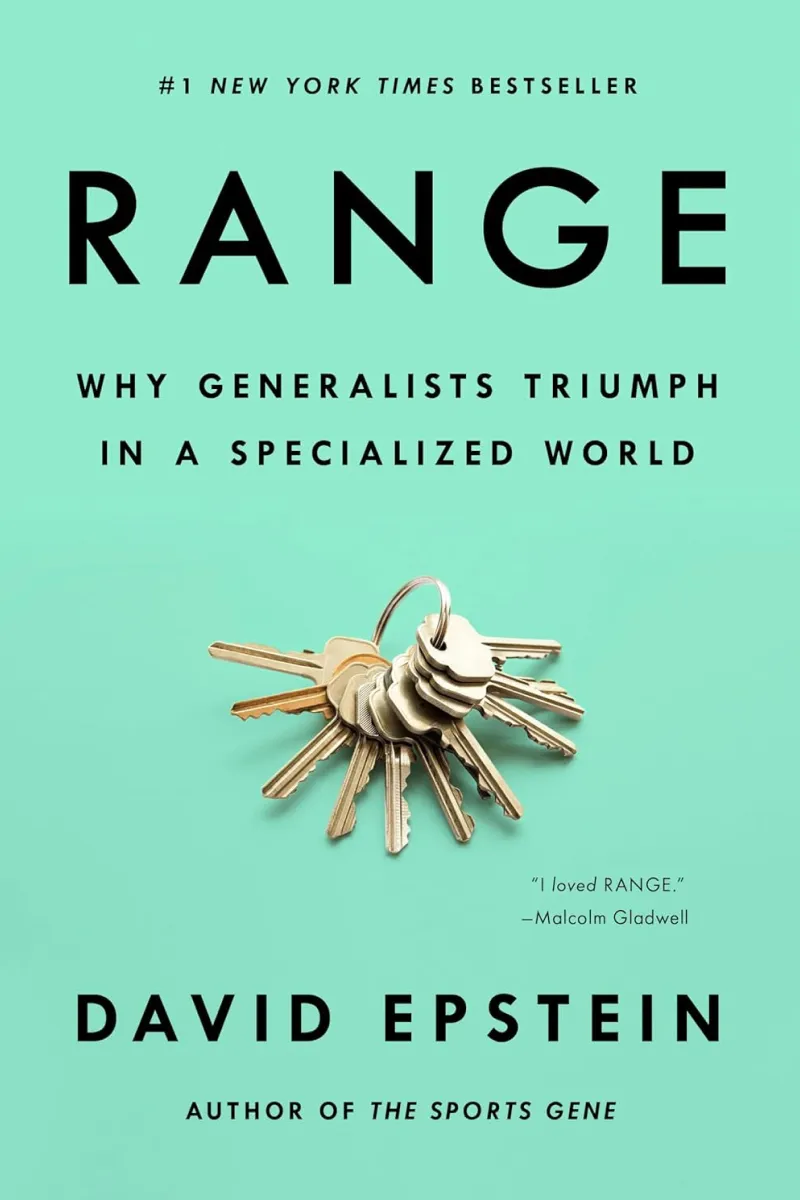
Published: 2019 | Pages: 352 | Difficulty: Intermediate
What it teaches: Why generalists (people with broad experience across multiple fields) often outperform specialists in complex, unpredictable domains, even though early specialization is constantly pushed. Uses research and case studies to show that experimentation, broad learning, and late specialization lead to better outcomes in most knowledge work.
Why it works for knowledge workers: Knowledge workers constantly face the specialist vs generalist question: should I go deep in one area or broad across many? The conventional wisdom is specialize early—pick a niche and become the expert. Epstein challenges this with data showing that in complex domains (most knowledge work), generalists who’ve explored multiple fields often develop better problem-solving skills, more creativity, and longer careers. This is validating if you’ve changed roles, industries, or interests and worried you’re “behind” more specialized peers.
Key concepts you’ll learn:
-
Kind vs wicked learning environments: Kind environments have clear rules, repeating patterns, and immediate feedback (chess, golf). Wicked environments have unclear rules, few patterns, delayed or inaccurate feedback (most knowledge work, business, innovation). In kind environments, early specialization and deliberate practice work. In wicked environments, broad exploration and analogical thinking work better. Most knowledge work is wicked—you’re solving novel problems with incomplete information in changing contexts. This means the 10,000-hours-to-mastery advice (based on kind environments) doesn’t apply. I realized my career anxiety about not having 10 years in one specialty was misplaced—my breadth across marketing, analytics, and product was actually an advantage for the complex strategic work I was doing.
-
The trouble with too much grit: Epstein challenges the narrative that you should persevere through any obstacle. In wicked environments, sometimes quitting is the right move—it frees you to find better matches for your skills and interests. Top performers in many fields (including Nobel Prize winners) tried multiple paths before finding their calling. The key is distinguishing between productive struggle (challenging yourself within the right domain) and unproductive struggle (persisting in a poor fit). This gave me permission to leave a prestigious job that wasn’t working. I’d felt like a quitter; Epstein’s research showed that strategic quitting accelerates finding good matches.
-
Lateral thinking from outside contexts: Generalists solve problems by importing ideas from unrelated domains. Someone with background in biology and technology might solve a manufacturing problem by applying how immune systems work. These analogies aren’t available to deep specialists who only know one domain. Epstein shows that breakthrough innovations often come from outsiders or people who’ve worked across fields. I started deliberately learning outside my core area (reading about cognitive psychology while working in tech product management) and found the analogies incredibly useful—applying psychological concepts to user behavior led to better product decisions than just knowing technical implementation.
The most valuable chapter: “Learning, Fast and Slow” distinguishes between desirable difficulties (learning strategies that feel harder but produce better retention) and blocked practice (repeating the same thing until automatic, which feels easy but doesn’t transfer to new contexts). Interleaving (mixing different types of problems), spacing (distributing practice over time), and generation (trying to solve before being taught) all feel inefficient but produce better long-term learning. Knowledge workers should embrace these desirable difficulties rather than pursuing efficient expertise. I changed how I learned new technical skills: instead of working through tutorials linearly, I’d attempt projects first (generation), mix learning multiple technologies simultaneously (interleaving), and return to topics after gaps (spacing). This felt chaotic but I retained more and could adapt skills to new contexts better.
Practical application: Epstein provides a framework for developing range. First, explore broadly early in your career—try different roles, industries, or functions before committing. This might mean taking lateral moves that seem off-track. Second, look for “match quality”—the fit between your abilities and interests and the work’s requirements. This improves through sampling, not through thinking. Third, develop the ability to think analogically—deliberately learn outside your core domain and practice connecting concepts across fields. Fourth, when solving problems, “zoom out” to abstract patterns rather than staying in domain-specific details. I applied this by switching from engineering to product management (seemed like a detour) then to growth marketing (seemed random). This range gave me unique problem-solving ability because I could see technical, product, and marketing angles simultaneously.
What beginners struggle with in this book: The case studies are often elite performers (Nobel Prize winners, top athletes, successful innovators), which can feel discouraging if you’re an average knowledge worker. The book also doesn’t provide clear decision rules for when to explore vs when to commit—it argues for exploration but doesn’t say how long or how much. Some readers interpret “range is good” as “specialization is always bad,” which isn’t Epstein’s point—he argues specialization should come later after exploration. The biggest struggle: the book validates winding career paths, but in job interviews, you still need to explain gaps and changes convincingly to employers who value linear progression.
Best read when: You’re questioning whether your varied background is a weakness or feeling behind more specialized peers. You’re mid-career and considering whether to go deeper in your specialty or broader across domains. You’re analytically curious and enjoy reading research and case studies. Not ideal if you need immediate tactical career advice or if you’re in a truly specialized field where deep expertise is non-negotiable (surgery, law, etc.).
Real limitation: The book is stronger on why range is valuable than on how to develop it strategically. Epstein shows that successful generalists explored early and specialized late, but doesn’t provide frameworks for deciding which domains to explore, how to make exploration financially sustainable, or when to commit. The research also focuses more on creative and intellectual domains than on other types of knowledge work—it’s not clear if range helps as much in execution-heavy or relationship-heavy roles. And while Epstein is right that wicked environments favor generalists, many companies still hire and promote specialists, creating a mismatch between what succeeds and what’s rewarded.
Follow-up reading: After this, read “The Polymath” by Waqas Ahmed for more on cultivating breadth, or “Rebel Talent” by Francesca Gino for how non-conformists succeed in organizations.
Honorable Mentions Worth Your Time
The Startup of You by Reid Hoffman and Ben Casnocha
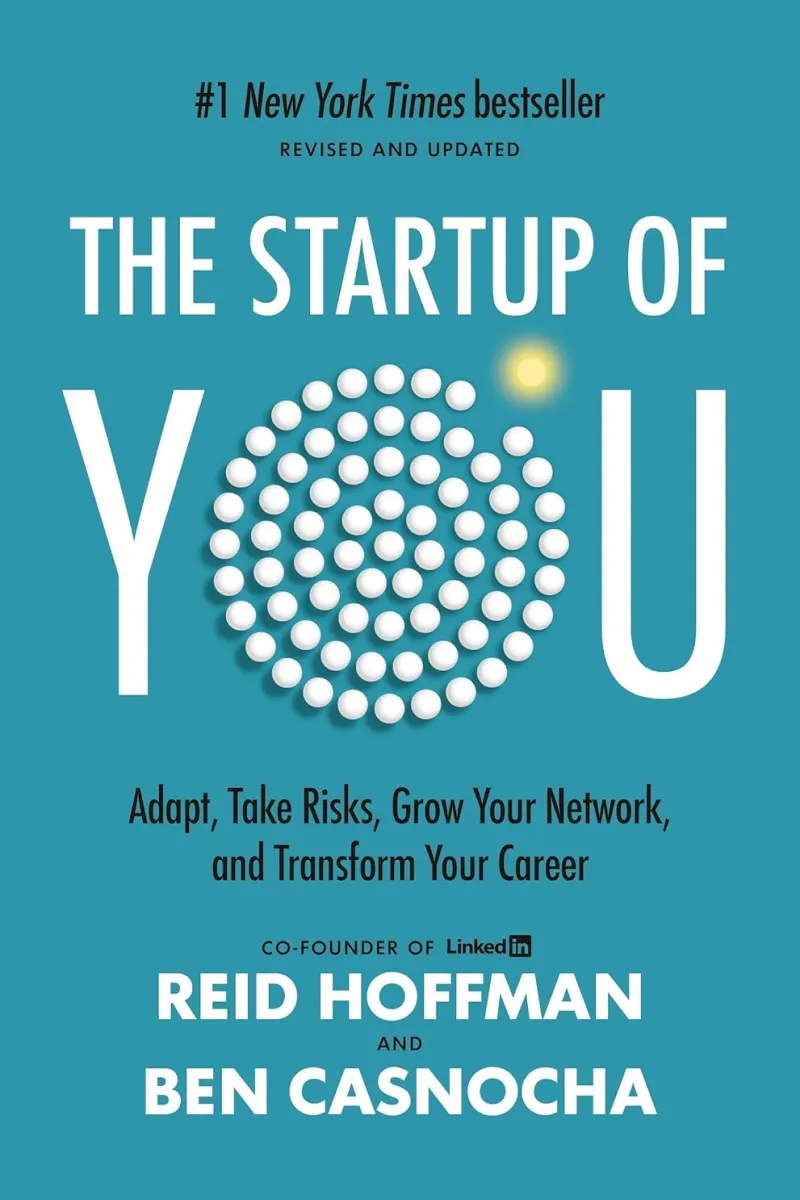
This didn’t make the top five because it overlaps significantly with “The Alliance” and is more tactical than strategic. However, if you want concrete advice on network building, taking intelligent risks, and adapting to change, this is excellent. Hoffman argues you should manage your career like a startup: always in beta, building network relationships as assets, and taking small risks to create opportunities. The ABZ planning framework (Plan A is your current path, Plan B is your pivot if A doesn’t work, Plan Z is your fallback) is useful for navigating career uncertainty. I used the networking chapter’s advice to build genuine professional relationships (not transactional networking) which led directly to my last two job opportunities. Worth reading after “The Alliance” if you want implementation tactics.
The Effective Manager by Mark Horstman
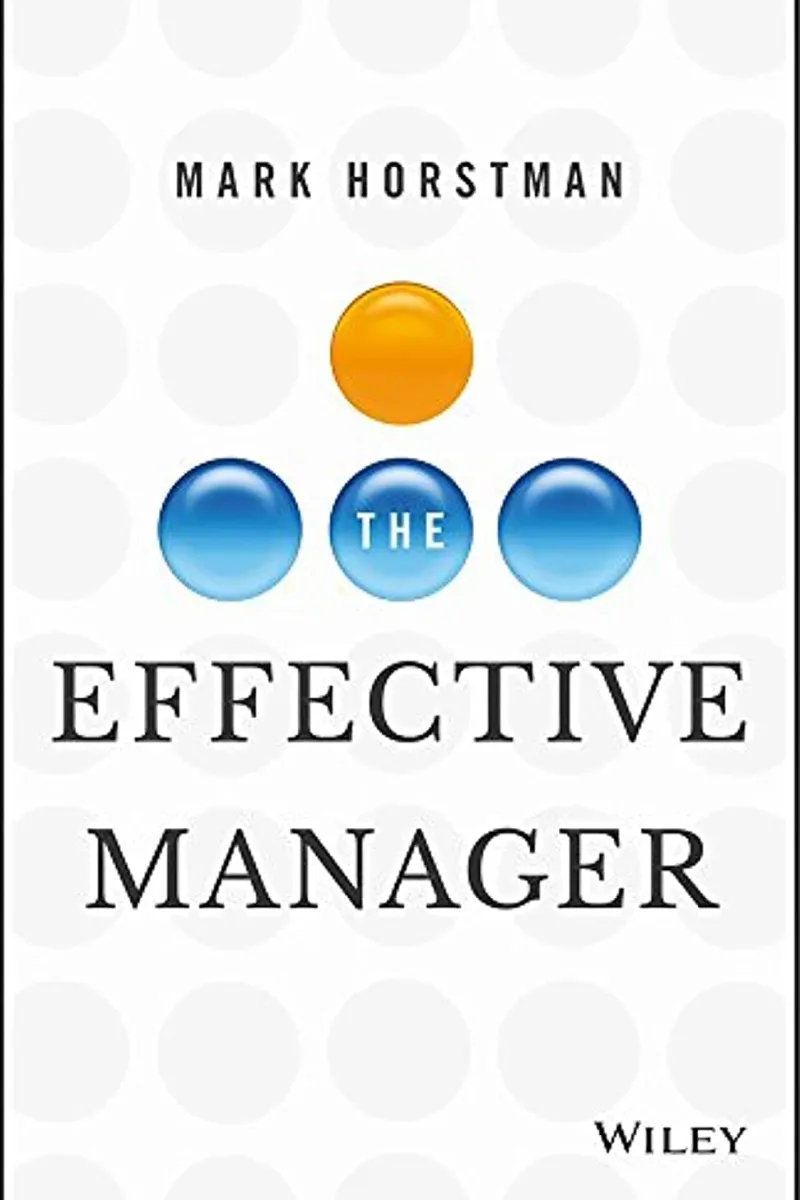
This is the best tactical management book for knowledge workers transitioning into management. It didn’t make the main list because it’s specifically for managers, not all knowledge workers. But if you’re managing people or about to, this book provides clear, actionable frameworks: the one-on-one structure, how to give feedback, how to delegate, and how to coach performance. Horstman is extremely prescriptive (do exactly this, say exactly these words) which some find limiting but I found helpful when I had no idea what managers actually do. The weekly one-on-one format (30 minutes: 10 for their agenda, 10 for your agenda, 10 for growth/coaching) transformed my management effectiveness. Read this before you become a manager or within your first six months of managing.
Atomic Habits by James Clear
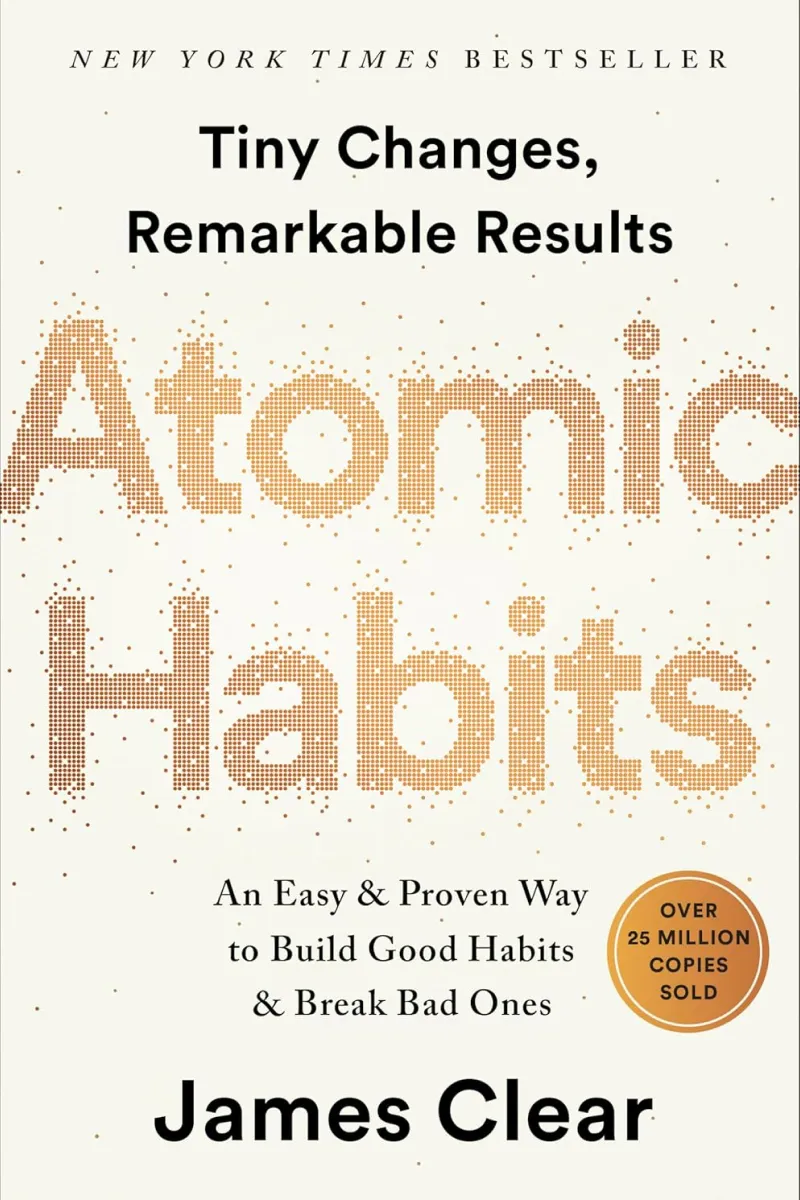
This isn’t career-specific but it’s essential for knowledge workers trying to build valuable skills. Clear provides frameworks for building habits that stick: make them obvious, attractive, easy, and satisfying. The concept of “identity-based habits” (decide who you want to be, then prove it with small wins) is powerful for skill development. I used Clear’s habit stacking and environment design principles to build my daily deep work practice—linking it to my morning coffee ritual and creating a dedicated workspace made it stick. The book is practical, research-based, and short. My one critique: it focuses almost entirely on individual habits and ignores organizational or social context. Read this alongside the career books when you know what skills to build but struggle with consistency.
Books to Skip (And Why)
What Color Is Your Parachute? by Richard N. Bolles
Why it’s overhyped: This is the bestselling career book of all time, updated annually since 1970. It focuses on job search tactics (resumes, interviews, networking) and finding the “right” job through self-assessment exercises. The problems: the advice is generic and dated (most job seekers don’t need help with resume format in 2025), the self-assessment exercises are time-consuming and don’t lead to actionable insights, and the “find your passion” philosophy conflicts with evidence-based advice from “So Good They Can’t Ignore You.” The book treats job search as a discrete event when modern knowledge workers should think about continuous career development.
Better alternative: Read “The Alliance” for how to think about jobs as tours of duty with specific objectives, and use LinkedIn, industry-specific job boards, and your professional network for actual job search tactics. For self-assessment, the ReflectionsWave or StrengthsFinder assessments are more useful than Bolles’s exercises.
The 4-Hour Workweek by Timothy Ferriss
Why it fails knowledge workers: Ferriss’s advice centers on automation, outsourcing, and lifestyle design to minimize work hours. While some principles are valid (focusing on high-impact activities, eliminating time-wasters), the core premise doesn’t work for most knowledge workers. You can’t outsource strategy, analysis, creative work, or relationship-building to virtual assistants. The book also promotes geographic arbitrage (earn US salary, live in cheap countries) which is less viable post-remote-work normalization. Most problematically, it treats work as something to escape rather than something to find fulfilling through skill development and contribution.
Better alternative: Read “Deep Work” for actually reducing wasted time while increasing valuable output, or “Your Money or Your Life” if you’re interested in financial independence but want a more grounded approach than Ferriss’s lifestyle hacking.
How to Read These Books Effectively
Reading order for knowledge workers
-
Start with: “Deep Work” - This gives you the foundation for everything else: the ability to focus and build valuable skills. Spend 4-6 weeks implementing the deep work practices while reading. The improved focus makes reading and applying the other books easier.
-
Then read: “So Good They Can’t Ignore You” - Now that you have the focus capability, Newport’s framework tells you what skills to build and why. This shapes your strategic direction for the next 2-3 years of skill development.
-
Follow with: “The Effective Executive” if you’re mid-career and making strategic decisions, OR “The Alliance” if you’re navigating job decisions and employment relationships. Both help you make better strategic choices about where to focus your newly developed skills.
-
Read when relevant: “Range” when you’re questioning your career path or dealing with specialists vs generalist decisions. It’s more philosophical and validating than immediately actionable.
Reading strategies that actually work
Read with your career situation in mind: These books are frameworks, not rules. Constantly ask “how does this apply to my specific role, industry, and goals?” When Newport says do 4 hours of deep work daily, consider whether your role allows this and what it looks like in your context. When Drucker says focus on contribution, define what contribution means for your level and function. I keep a “translation document” where I write book principles in the left column and my specific application in the right column. This prevents reading from becoming theoretical.
Implement one concept before adding more: Career books contain 10-20 major concepts each. Trying to implement everything simultaneously fails. Pick one concept from each book that addresses your biggest current constraint, implement it for 4-6 weeks until it’s habitual, then add the next concept. From “Deep Work,” I implemented rhythmic scheduling first (6-8am daily deep work). Only after that became automatic did I add the shutdown ritual. This sequential implementation built capability rather than creating overwhelm.
Join or create accountability structures: Reading alone makes it easy to nod along without changing behavior. Find an accountability structure: a colleague also reading the book for weekly discussion, a book club focused on implementation, or a coach/mentor to review your application of concepts. I created a quarterly book group with three colleagues where we each chose one book to implement and shared results. This peer pressure made me actually apply Newport’s career capital framework rather than just agreeing with it in theory.
Common reading mistakes
Collecting books instead of applying them: I’ve met knowledge workers with 50+ unread career books on their shelves, collecting them like trophies. The value isn’t in owning or reading the book—it’s in changing behavior. The fix: one book at a time until you’ve implemented at least three major concepts from it. Don’t buy or start the next book until you can point to specific behavior changes from the current one. My rule: a book stays on my desk until I can write a one-page summary of what I changed because of it.
Looking for the “one right answer”: Knowledge workers often read career books hoping to find the definitive answer to their career questions. These books provide frameworks for thinking, not answers. “So Good They Can’t Ignore You” won’t tell you which specific skill to build—it gives you a framework for identifying valuable skills. “The Alliance” won’t tell you whether to take a specific job—it gives you a framework for evaluating tours of duty. The fix: use books to improve your decision-making process, not to outsource decisions.
Reading for your past self instead of your current self: People often read books recommended for their situation 2-3 years ago. If you’re mid-career, books aimed at early career won’t help much. If you’re technical, books focused on management aren’t immediately relevant. The fix: before buying a book, write down your top three career challenges right now. If the book doesn’t clearly address at least one of them, don’t read it yet. Save the book and revisit when your challenges change.
Pairing Books with Other Resources
”So Good They Can’t Ignore You” + Deliberate Practice in Your Domain
Newport’s book explains why to build rare skills through deliberate practice. Pair it with domain-specific resources on deliberate practice: “The Effective Engineer” for software engineers, “The Back of the Napkin” for visual thinking, “On Writing Well” for writing. The pattern: Newport provides the career capital framework, the domain-specific book shows you how to practice your specific craft. I paired Newport with “Thinking in Systems” because systems thinking was a rare skill in my tech role. Newport explained why to build it, Meadows showed me how to practice systems analysis on real problems.
”Deep Work” + Time Tracking and Analytics Tools
Newport teaches deep work principles. Pair with tools that track and analyze your time: RescueTime (automatic tracking), Toggl (manual tracking), or even a spreadsheet. The tools make visible what Newport discusses: how much time you actually spend in deep vs shallow work, what distracts you, when you’re most focused. I used RescueTime to discover I had only 11 hours weekly of focused work (out of 50 work hours). This data made Newport’s advice concrete and measurable. Track for a month pre-implementation, implement deep work practices, track for another month to see improvement.
”The Effective Executive” + Regular Reviews and Reflection
Drucker’s book requires ongoing reflection on effectiveness and contribution. Pair with a review system: weekly reviews (what did I contribute?), monthly reviews (am I focused on high-impact work?), quarterly reviews (is my time allocation aligned with my priorities?). I use a simple template: What were my planned contributions this period? What did I actually accomplish? Where did time go? What to change? This regular reflection makes Drucker’s abstract principles concrete and forces continuous improvement.
Situational Recommendations
| Your Situation | Start With | Why |
|---|---|---|
| Early career (0-3 years), unclear direction | So Good They Can’t Ignore You | Reframes career search from passion to skill building |
| Overwhelmed by constant distractions | Deep Work | Teaches focus fundamentals for knowledge work |
| Mid-career, making strategic choices | The Effective Executive | Provides decision frameworks for complex trade-offs |
| Considering job change or negotiating role | The Alliance | Reframes employment as strategic alliance with tours of duty |
| Questioning specialist vs generalist path | Range | Validates broad experience in complex domains |
| New manager or about to become one | The Effective Manager (honorable mention) | Most practical management tactics book |
| Feeling behind due to varied background | Range | Research showing generalists’ advantages in knowledge work |
| Want to increase output without burnout | Deep Work | Time-based strategies for better results in less time |
Frequently Asked Questions
Q: Should I buy physical books or digital?
For career books you’ll implement from (especially “Deep Work” and “So Good They Can’t Ignore You”), buy physical. You need to highlight frameworks, take notes in margins, and reference them repeatedly. For more theoretical books you’ll read once (“Range,” “The Millionaire Next Door”), digital is fine. I have physical copies of “Deep Work,” “So Good They Can’t Ignore You,” and “The Effective Executive,” all heavily marked up with my specific applications. These sit on my desk for regular reference. The others I read as ebooks and took notes in a separate document.
Q: Can I just get summaries instead of reading the full books?
Summaries work for understanding main concepts but fail for implementation. A summary of “Deep Work” will tell you to minimize distractions, but the book’s value is in the specific scheduling philosophies, ritual-building tactics, and capacity-building strategies. Summaries miss the nuance and can’t provide the examples that show how to apply concepts in different contexts. Use summaries to decide which books to buy, not as replacements. Exception: more theoretical books like “Range” work reasonably well as summaries since you’re not implementing a specific system.
Q: How long does it take to read and implement these?
“Deep Work”: 2-3 weeks reading, 8-12 weeks to build consistent deep work practice. “So Good They Can’t Ignore You”: 2-3 weeks reading, then ongoing (you don’t “finish” building career capital). “The Effective Executive”: 2-3 weeks reading, 3-6 months to implement the practices. “The Alliance”: 1-2 weeks reading, applies to specific job transitions. “Range”: 2-3 weeks reading, shapes long-term career decisions. Total for all five with implementation: 12-18 months if done thoughtfully. Most people read faster but implement slower, which makes reading pointless.
Q: Are older editions okay or should I get the latest?
“Deep Work” (2016) and “So Good They Can’t Ignore You” (2012): Original editions are fine, no significant updates. “The Effective Executive”: Get the 2006 revised edition or later, not the 1967 original. Updates include better examples and some language modernization. “The Alliance” (2014): Original edition is fine. “Range” (2019): Latest edition only. None of these books have frequent updates like annual career guides. The principles are relatively timeless; the examples and references date more than the frameworks.
Q: What if I don’t have time to read these books?
If you genuinely don’t have time to read career books, you have a more fundamental problem: your time management and priorities need work. These books will help solve that problem, but you need to create time to read them. Options: (1) replace low-value activities (social media, Netflix) with reading for 30 minutes daily—you’ll finish each book in 1-2 weeks. (2) Listen to audiobook versions during commute or exercise (though taking notes is harder). (3) Read one book over 2-3 months, one chapter weekly. The worst approach: not reading because you’re “too busy” while continuing to feel stuck in your career.
What to Do After Reading
If you read “So Good They Can’t Ignore You”:
-
Immediate next step: Identify the 3-5 most valuable and rare skills in your domain. Interview senior people, look at job descriptions for roles you want, analyze what top performers do. Write these skills down and rank them by value and rarity.
-
Within 30 days: Choose one skill to develop through deliberate practice. Create a specific practice plan: what will you practice, how will you practice, how will you get feedback, how often. Block 5-10 hours weekly for practice separate from your normal work.
-
Follow-up resource: Read “Peak” by Anders Ericsson for deeper dive on deliberate practice across domains. Join a professional community focused on your chosen skill for feedback and accountability.
If you read “Deep Work”:
-
Immediate next step: Track your time for one week in 15-minute increments, categorizing activities as deep work, shallow work, or personal. Calculate current deep work hours. Most knowledge workers are shocked by how low this number is.
-
Within 30 days: Implement one deep work scheduling philosophy (rhythmic is easiest for most). Block time on calendar, build rituals, defend the time. Start with 1 hour daily and gradually increase. Track deep work hours weekly and aim for 10% monthly increases.
-
Follow-up resource: Read “Make Time” by Knapp and Zeratsky for complementary tactics, especially for protecting time in team environments. Consider time-tracking software like RescueTime for ongoing measurement.
If you read “The Effective Executive”:
-
Immediate next step: Complete Drucker’s time audit. Track your time for 3-4 weeks, then analyze: what time-wasters can I eliminate, what can I delegate, what is my actual discretionary time? Identify your top time-wasters and create elimination plans.
-
Within 30 days: Define your expected contribution in your current role. What unique value can you provide that others can’t? Write this down and review it weekly to ensure activities align with contribution.
-
Follow-up resource: Read “High Output Management” by Andy Grove for more tactical management advice building on Drucker’s principles. Consider working with a manager or coach to get feedback on your effectiveness decisions.
Who This Reading List Is (and Isn’t) For
Good fit if you:
-
Work primarily with information, ideas, and people rather than physical products. You’re evaluated on thinking and problem-solving, not hours or units produced.
-
Have at least 2-3 years of work experience. You’ve encountered the career challenges these books address (focus, skill development, political navigation) firsthand. You’re not completely entry-level.
-
Have some autonomy over how you work, even if limited. You can potentially adjust your schedule, choose which projects to prioritize, or decide what skills to develop. You’re not in a completely rigid, prescribed role.
-
Are analytically minded and enjoy frameworks and mental models. These books provide structures for thinking, not step-by-step checklists. You need to adapt principles to your context.
Skip this list if:
-
You’re in highly specialized professional tracks with clear progression (medicine, law, academia). Some of these books’ frameworks don’t apply to fields with formal credentialing and progression.
-
You’re looking for immediate job search tactics (resume writing, interview preparation, salary negotiation). These books are about long-term career strategy, not job search execution. Use industry-specific resources for tactics.
-
You prefer video courses, podcasts, or interactive learning over reading. These concepts exist in other formats, but these specific books require reading to get full value.
-
You’re in true execution-focused roles without knowledge work components (manufacturing line work, retail, service). The frameworks assume cognitive work with significant ambiguity and autonomy.
By career stage:
-
Early career (0-3 years): Focus on “Deep Work” (build focus capacity) and “So Good They Can’t Ignore You” (understand career capital). Skip “The Effective Executive” until you have more autonomy.
-
Mid-career (4-10 years): All five books are relevant. Start with whichever addresses your biggest current challenge: focus, skill development, effectiveness, job transitions, or career direction.
-
Senior/Leadership (10+ years): “The Effective Executive” most relevant. “Deep Work” and “So Good They Can’t Ignore You” useful if you’ve neglected these fundamentals. “Range” helpful if considering reinvention.
The Takeaway
If you only read one book from this list, choose “Deep Work”—it provides the foundational capability (sustained focus) that makes everything else possible. If you read all five, go in this order: Newport’s “Deep Work” for focus fundamentals, Newport’s “So Good They Can’t Ignore You” for strategic skill development, Drucker’s “The Effective Executive” for decision-making, Hoffman’s “The Alliance” for navigating employment, and Epstein’s “Range” for long-term career direction.
The most important mindset shift these books provide: career success for knowledge workers isn’t about finding the right job, working harder, or political maneuvering. It’s about systematically building rare and valuable skills through focused practice, making strategic decisions about where to apply those skills, and honestly navigating the modern employment relationship. These books taught me that career advancement comes from increasing your value and using it strategically, not from hoping the right opportunity finds you.